Salik for Rental Cars in Dubai: Admin Fees and Toll Costs

Understanding Salik for rental cars in Dubai helps you separate AED 4 tolls from rental admin fees, check crossing records and avoid billing surprises.
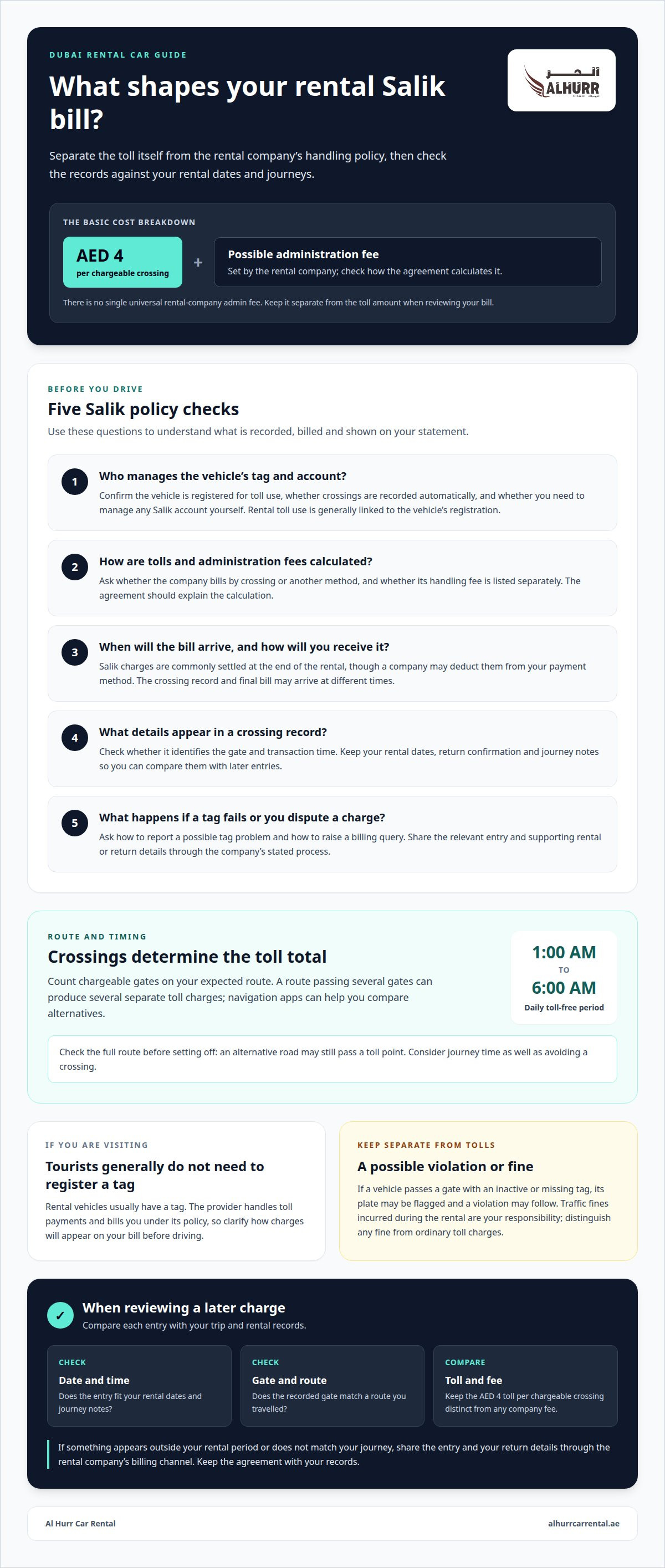
The toll is only part of the Salik charge you may see on your UAE rental bill. Understanding Salik for rental cars in Dubai starts with the basic toll: AED 4 per crossing, billed to you, while a provider like Al Hurr Car Rental or another agency may also apply an administrative fee under its own policy.
It’s reasonable to expect a clear breakdown of what you’re paying. The key point is that there isn’t one universal rental-company admin fee, so the total depends on the crossings you make and how the company handles billing. Salik tolls are commonly settled at the end of the rental period.
This guide explains how tolls and admin fees can appear on your bill, what happens if a crossing is disputed, and which Salik policy details to clarify before you drive. You’ll also learn what to look for in the rental agreement so you can plan your journeys across the UAE with fewer surprises.
Key Takeaways
- Learn why a rental Salik bill can include both toll use and a separate handling charge.
- See how crossing times and travel routes can affect the toll total.
- Know what details to look for when reviewing a crossing record or disputing a charge.
- Find out what to clarify about Salik billing, payment timing and your rental deposit.
- Understand how toll-free routes may help you plan journeys around Dubai.
How Much Is the Rental Salik Admin Fee?
There is no single rental-company administration fee for Salik in Dubai. The rental company sets its own billing policy, so check the agreement for how it calculates any handling charge. The toll amount may be billed separately from any rental-company handling charge. Keep the toll amount separate from any rental-company fee when reviewing your final statement.
Your toll budget depends on how many chargeable gates your journeys pass. For example, count the crossings on your planned routes, then allow for the rental company’s stated administration method. It may list a fee per crossing or handle charges another way. The agreement should explain the calculation, so you can estimate costs without treating an illustrative total as a guaranteed bill.
Keep track of your journeys as you drive. Note the date, approximate time and route for each Salik crossing. If you receive a crossing record, compare its details with your notes and rental dates. This can help you spot an entry that appears outside your rental period or does not match a journey you made.
If a rental car passes a Salik gate with an inactive or missing tag, the vehicle’s plate may be flagged and a violation may follow. Report a possible tag problem to the rental company and keep your rental and return records. Traffic fines incurred during the rental are your responsibility, so distinguish any fine from ordinary toll charges when reviewing the bill.
Dubai’s Salik toll is AED 4 per crossing. For budgeting, multiply the number of chargeable crossings on your expected journeys by that amount, then account for any administration fee stated in your agreement. Salik crossings are free daily from 1:00 AM to 6:00 AM. A route that passes through several gates can therefore produce several separate toll charges.
Navigation apps can help you compare routes that avoid Salik gates. Before you set off, check the full route rather than only the destination, because a suggested alternative may still pass a toll point. An alternative road can help avoid a crossing, but consider journey time as well. Any gate you pass remains chargeable under the applicable rental policy.
Salik charges for rental cars: understanding Salik for rental cars in Dubai
A rental car’s Salik charges come from its recorded toll-gate crossings, while billing follows the rental agreement. The agreement explains how the rental company handles those charges and any administration fee.
How Rental Car Tolls Are Charged
Salik is an electronic toll system that records a vehicle passing a Dubai toll gate. The tag is associated with the vehicle, so toll use is linked to its registration rather than your personal account. Your route determines which crossings are recorded, and the rental company bills you for those crossings under the rental terms.
When Rental Toll Charges Are Billed
Rental Salik charges are commonly settled at the end of the rental, although a company may deduct them from your payment method. A crossing record and the final bill may not arrive at the same time. Keep your rental dates and return confirmation accessible, so you can compare them with later transactions. The agreement explains the company’s billing method and when any balance is due.
Tourist Salik Tag Requirements
Tourists generally don’t need to buy or register a Salik tag for a rental car in Dubai. Rental vehicles usually have a tag, and toll use is recorded against the vehicle’s registration. The rental provider handles Salik payments, then bills the renter under its policy. Before driving, clarify how toll charges will appear on your bill and who manages the account linked to the vehicle.
Checking Rental Salik Charges
Compare the crossing record with your rental dates and travel notes. Check the date, time and gate for each entry, then identify anything that appears outside your rental period. An invoice may include the crossing history when the vehicle is returned. If you spot a discrepancy, share the relevant entry and your return details through the rental company’s billing channel. Keep the agreement with your records.
Your rental period can shape which arrangement suits your plans. Consider whether you need a car for a short visit, several days or a longer stay, then review how the rental agreement treats toll billing. Comparing the available rental options alongside your expected driving can help you choose a suitable vehicle and rental period.
Asking about a rental company’s Salik policy
Before accepting a rental car, understand how Salik crossings are recorded and billed. The rental agreement should explain how toll costs are charged and how the company communicates them. Reading the terms before you drive gives you a clear reference if you need to review a later statement.
Start by asking how the vehicle’s Salik tag and account are managed. Confirm that the vehicle is registered for toll use, whether crossings are recorded automatically, and whether you need to manage any Salik account yourself. In a rental, toll activity is generally associated with the vehicle. Knowing who processes the transactions can prevent confusion about your personal account.
Then clarify what each charge represents. Ask whether the rental company bills toll charges by crossing or another method, and whether any administration fee appears separately. Find out when the bill is prepared and how you’ll receive its details. A clearly itemised statement makes it easier to distinguish toll use from handling charges.
Use these questions to make the policy concrete:
- What does the crossing record show? Ask whether it identifies the gate and transaction time.
- How are automatic payments handled? Clarify who settles the toll account and how charges reach your bill.
- How are administration fees calculated? Ask whether the agreement lists them separately from tolls.
- What if a tag does not register? Ask how the company handles a disputed crossing or possible violation.
- How can I raise a billing query? Find the stated process for sharing an invoice entry and supporting details.
Check the wording about deposits as well. Your agreement should explain whether unpaid toll charges affect the amount returned after the rental. Ask how the company handles a charge recorded after the vehicle is returned, and what record it uses to match transactions to your rental. Keep the agreement and return confirmation in case you need to discuss an entry.
As you consider vehicle choices for your trip, review the available fleet alongside the rental terms. A vehicle’s likely routes and your rental period can shape which Salik questions matter most. For example, regular trips through toll-gate areas make billing frequency and itemised records especially useful to understand before you set off.
How can renters check Salik charges and when are they billed?
Salik records each chargeable crossing against the vehicle’s registration. To review a rental bill, match the crossing history with your rental dates, journeys and agreed billing terms. Rental companies commonly settle toll charges at the rental period’s end, though some deduct them from your payment method.
Use this check when you receive an invoice or crossing record:
- Match every listed crossing date with the rental start and return times.
- Compare the recorded gate and time with your route notes or navigation history.
- Check the applicable time-based tariff for each crossing.
- Separate the toll amount from any rental-company administration fee.
- Keep the invoice and rental agreement together until charges are settled.
A crossing record may show the gate, date and time. Compare those details one by one rather than relying only on the total. For example, an entry recorded after the vehicle’s return time may need review. Your return confirmation and rental agreement help establish when your responsibility for the vehicle ended.
Timing can affect the amount shown. Dubai’s Monday-to-Saturday peak periods are 6:00 AM-10:00 AM and 4:00 PM-8:00 PM; off-peak periods are 10:00 AM-4:00 PM and 8:00 PM-1:00 AM. The applicable toll amount can depend on the crossing time, and additional charges may affect the total. Compare each timestamp with the applicable tariff.
The final bill may arrive after your last drive because the rental company must process recorded crossings. If charges are deducted from your payment method, compare the deduction with the itemised invoice. If they are settled at return, ask for a crossing history showing the transactions included. The agreement explains whether an administration fee is billed separately or alongside toll costs.
If a crossing does not match your records, identify the specific entry and share its date, time and gate with the rental company. Explain whether it falls outside your rental period or differs from your route notes. If a violation appears, distinguish it from ordinary toll charges and ask for the crossing details. Keep your correspondence and payment records so any follow-up refers to the same transaction.
Which Dubai roads and toll gates charge Salik, and are any crossings free?
Dubai Salik charges apply at designated toll gates, not on every road. As of 2026, listed locations include Sheikh Zayed Road, Al Garhoud Bridge, Al Maktoum Bridge, Safa Tunnel, Al Mamzar North and South Tunnels, and Business Bay Crossing. Check your route for these names before setting off.
A journey may pass several gates, so the route matters as much as the destination. For example, a trip using Sheikh Zayed Road can cross toll points along the way. Navigation apps can help you compare routes, but review the map before driving because an alternative may still pass a Salik gate.
- Sheikh Zayed Road: contains Salik toll points along the route.
- Al Garhoud Bridge and Al Maktoum Bridge: both are listed gate locations.
- Safa Tunnel and Business Bay Crossing: each is a designated Salik location.
- Al Mamzar North and South Tunnels: both are listed toll points.
Some routes avoid Salik gates. Al Khail Road is a toll-free alternative to Sheikh Zayed Road, while Jumeirah and Beach Roads also offer toll-free route options. These roads may help you avoid a toll crossing, although traffic and journey time can differ. Check the route before departure rather than assuming a road is toll-free because it runs parallel to another road.
Under the standard schedule, Salik crossings are free daily from 1:00 AM to 6:00 AM. Al Maktoum Bridge also has a specific schedule: it is free every night from Thursday to Saturday, while tolls apply at any time from Monday through Wednesday. Sunday and Ramadan schedules can differ from regular weekday timings, so check the applicable schedule for your travel date.
When planning a trip, enter your starting point and destination, then inspect the route for named gates. If you want to avoid tolls, compare alternatives such as Al Khail Road or Jumeirah Road. A route that avoids one gate may still reach another, so check the full journey. Understanding which Dubai roads carry Salik helps you anticipate crossings before your rental drive.
Choose a vehicle for your Dubai routes by browsing the car rental fleet.
Al Hurr Car Rental
Al Hurr Car Rental offers rental options for drivers who want to plan their Dubai journeys with Salik costs in mind. Understanding how toll charges are recorded and billed helps you choose a rental period that suits your itinerary and budget.
Salik is a separate driving cost from the rental itself. Your total toll spend depends on the gates you cross, crossing times and the rental company’s billing terms. Before setting out, use the agreement to understand how toll charges and any administration fees appear on your final bill. This helps you plan for both the vehicle rental and your routes.
Choose a rental period around how you expect to use the car:
- Daily Car Rental suits a short Dubai visit or a specific day of driving.
- Weekly Car Rental can fit a trip with several days of journeys across the city.
- Monthly Car Rental works for a longer stay with regular driving needs.
- Leasing Car is an option for a longer-term vehicle arrangement.
Whichever rental period you choose, map your regular journeys before driving. A route that passes several Salik gates will incur more toll charges than one that avoids them. Keep your route notes and rental dates together. If a toll entry appears on your bill, those details can help you check whether it matches your vehicle use.
Al Hurr Car Rental focuses on transparent pricing with no hidden fees. Read the rental terms for how Salik crossings are billed, when charges are collected and whether administration fees apply. These details help you distinguish toll costs from the rental charge, and understand the amount due after the vehicle is returned.
For a short visit, a longer stay or an ongoing vehicle need, choose the rental arrangement that fits your plans. Consider your expected driving and Salik crossings together when budgeting before your first journey. You can then refer to your rental agreement and crossing record if a billing question arises.
For help choosing a rental arrangement, contact Al Hurr Car Rental.
Plan your Dubai drive with clarity
A practical understanding of Salik for rental cars in Dubai helps you make informed choices before your journey begins. As you plan your itinerary, consider how your routes, rental dates and agreement fit together. Keep your travel plans and rental documents accessible, so you can refer to them if a billing question arises later.
Choose a rental arrangement that suits your time in the UAE, and review the Salik terms alongside the rest of your agreement. A few minutes spent checking the details can give you a clearer picture of your responsibilities and what to expect after returning the vehicle.
If you’d like to discuss your rental plans, ask Al Hurr Car Rental about Salik. Then get ready to explore Dubai at your own pace.
Frequently Asked Questions
When Do Salik Charges Appear?
Salik charges commonly appear on the rental bill after you return the vehicle. The delay allows recorded crossings to be processed and matched to the rental. If you’re reviewing a later statement, compare its transaction dates with your rental period, not just the payment date. Keep your return confirmation until the final toll statement arrives, especially if your last journey passed a gate shortly before returning the car.
Can I avoid Salik gates, and how?
Yes. Choose a route that avoids designated toll points, then review the full journey before setting off. For example, Al Khail Road can be an alternative to Sheikh Zayed Road. A navigation app can help compare routes, but check whether the suggested path still passes a Salik gate. Avoiding a gate prevents that crossing’s toll, while any gates already crossed remain chargeable.
Can Salik Be Deducted From Your Deposit?
It depends on the rental agreement’s payment terms. Some rental companies may deduct toll charges from a payment method, while others settle them separately after the rental. Before signing, look for wording about outstanding tolls, administration fees and deposit deductions. If a deduction appears, compare it with the final itemised statement and ask for the transaction details supporting the amount.
How Does Salik Work?
Salik uses an electronic tag associated with the vehicle to record passage through a toll gate. In a rental car, the crossing is generally linked to the vehicle’s registration, rather than a personal account you manage. This means you can drive through a gate without stopping to pay there. The rental company’s billing process then determines how recorded toll use reaches your final account.
How Much Salik Cost Can I Expect Monthly?
Your monthly total depends on how often you cross gates and when you travel. As an illustration, a Dubai renter making 20 mostly off-peak crossings in a month is estimated to pay AED 80 in tolls. Treat this as a toll estimate, not a rental bill: any applicable administration fees follow the rental company’s policy and can change the total.
How do I know if I passed a Salik toll gate?
Look for a named toll location on your route, such as Al Garhoud Bridge or Business Bay Crossing. You can also compare your journey history with the gate and timestamp shown on a rental crossing record or invoice. If you’re unsure about a specific trip, note its approximate time and route, then match those details to the recorded transaction when the statement arrives.
How much will a crossing cost?
From 1 June 2026, a crossing with a AED 4 base toll costs AED 4.20 including VAT, while a AED 6 base toll costs AED 6.30 including VAT. The applicable base rate depends on the crossing time and schedule. A rental company may also charge a separate handling fee, so the amount on your rental bill can differ from the toll alone.
What Will You Actually Pay?
Your final Salik amount depends on the recorded crossings, their applicable toll rates and any rental-company administration fee. A clear understanding of Salik for rental cars in Dubai means separating those items when reviewing your bill. Check the rental agreement for the company’s charging method, then compare the statement with your trip records. This gives you a practical way to understand the amount due without confusing tolls with the rental charge.